

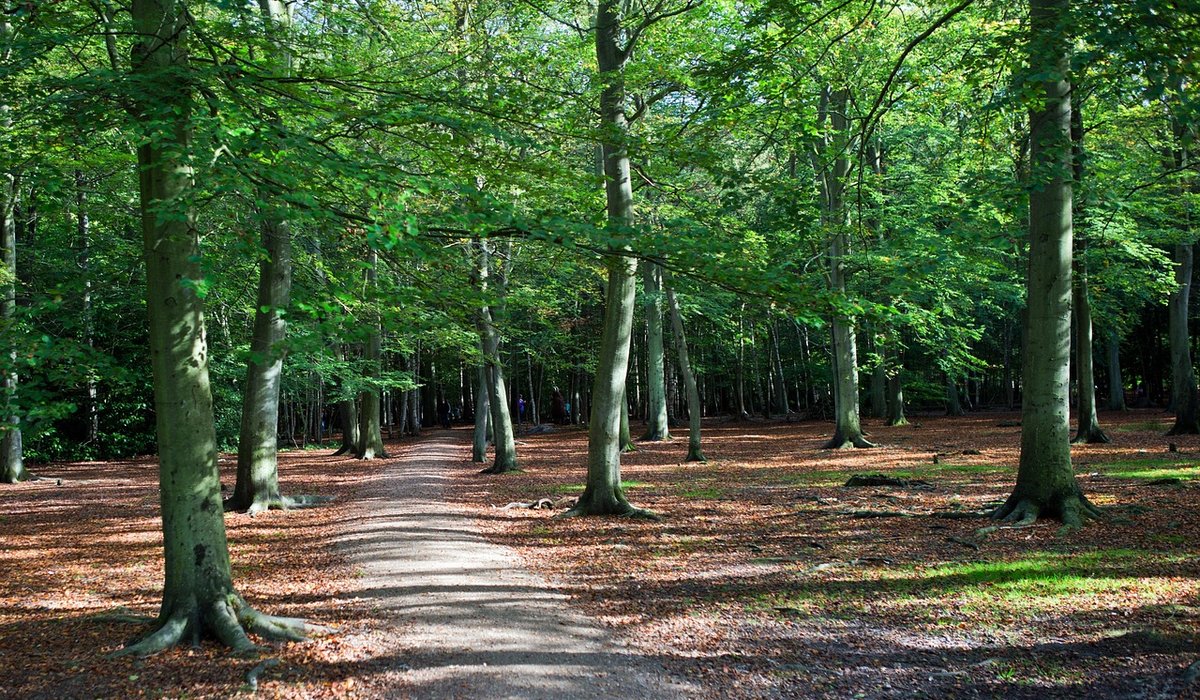
When the rain forgets to fall, the temptation is to reach for the watering can every evening and give everything a quick sprinkle. It feels productive, and the surface of the soil looks pleasingly dark afterwards. The trouble is that a shallow sprinkle does very little for a tree. It wets the top centimetre or two of soil, where most tree roots aren't, and it evaporates away within hours on a warm day.
Trees want a proper soak. Watering deeply once a week encourages roots to travel downwards, chasing moisture into the cooler, damper layers of soil. That deeper rooting makes a tree far more resilient the next time a dry spell comes along. Little and often does the opposite: it trains roots to sit near the surface, exactly where drought bites hardest.
As a rough rule for a UK garden, aim to give a tree a thorough soak once every seven to ten days during dry weather, rather than a light watering every day.
It helps to think in watering cans or buckets rather than seconds at the hose. For a newly planted tree, which is the most vulnerable, you're looking at around 10 to 15 litres per week in normal dry weather, and up to 20 litres in a genuine heatwave. That's roughly two or three full watering cans.
For established trees, the calculation is different. A mature tree has an extensive root system and can often fend for itself, but young and middle-aged trees still benefit from help. A useful guide is to water the area beneath the canopy out to the drip line, giving around 10 litres for every 2.5 centimetres of trunk diameter. A tree with a 10 cm trunk therefore wants something in the region of 40 litres, delivered slowly so it soaks in rather than running off.
It's a common mistake to point the hose at the base of the trunk. The feeding roots that take up water are spread out well beyond the trunk, generally in the top 30 centimetres of soil and reaching out at least as far as the branches above.
Water in a ring around the tree, working outwards from about 30 centimetres away from the trunk to the edge of the canopy. Move the hose or can around as you go, so the whole area gets an even share rather than one boggy patch. Delivering water slowly is key: if it starts pooling and running across the surface, pause and let it sink in before continuing.
A simple trick is to sink a couple of upturned plastic bottles with the bases cut off beside a new tree, then pour water into them. It delivers moisture straight down to the roots with minimal waste.
If you do only one thing beyond watering, make it mulching. A generous layer of organic mulch over the root zone dramatically reduces evaporation from the soil surface, keeps the ground cooler, and suppresses thirsty weeds that would otherwise compete for moisture.
Spread well-rotted compost, bark chippings or leafmould to a depth of 5–8 centimetres, covering the same ring you've just watered. Keep the mulch a hand's width clear of the trunk itself, as piling it against the bark can cause rot and invite pests.
Water early in the morning or in the evening, when the sun is low and evaporation is minimal. Early morning is best, as it lets foliage dry through the day and reduces the risk of fungal problems. Avoid the middle of a hot afternoon entirely.
Trees will tell you when they're struggling. Watch for leaves that droop during the day but recover overnight, which signals the early stages of drought stress. Leaves curling inwards, browning at the edges, or dropping prematurely in midsummer are all cries for help. Established trees may also shed leaves early as a survival tactic, so don't panic if a few come down in August.
Finally, resist the urge to fertilise a drought-stressed tree. Feeding encourages fresh growth that demands more water, which is the last thing a thirsty tree needs. Wait until the autumn rains return, then mulch and let nature do the rest.

The Maplebirch An honest, everyday look at the things that make life a little better — with advice you can actually use.

The Maplebirch Simple, genuine and looked after with care — the kind of place worth returning to.

Maple leaves vary in lobes and serration, while winged seeds differ in angle. Use these features to distinguish field, sycamore and Norway maple.

Comments
ALina Kelian
19th May 2018 ReplyThe Maplebirch Simple, genuine and looked after with care — the kind of place worth returning to. ullamco laboris nisi ut aliquip ex ea commodo consequat.
Rlex Kelian
19th May 2018 ReplyThe Maplebirch Written for people who value the details, and want honest guidance they can trust. ullamco laboris nisi ut aliquip commodo.
Roboto Alex
21th May 2018 ReplyThe Maplebirch An honest, everyday look at the things that make life a little better — with advice you can actually use. ullamco laboris nisi ut aliquip ex ea commodo consequat.