

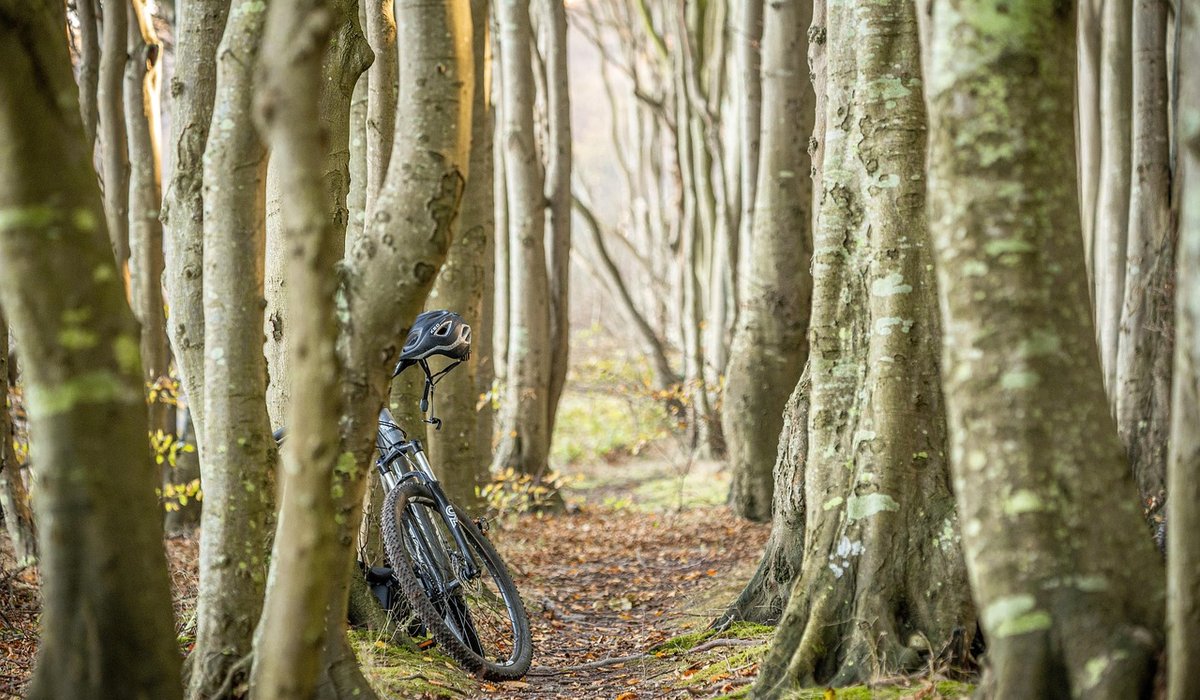
If you garden among British trees, you will know the annual dilemma: what to do with all those prunings, twigs and leafy branches? Burning them wastes a precious resource and sends carbon into the sky. Chipping them is noisy and fuel-hungry. A dead hedge offers a far better answer. It is simply a loose stack of woody material, held between stakes, that turns your garden waste into a living boundary. Unlike a tidy fence, a dead hedge teems with life. It shelters insects, provides nesting sites for birds, and gives hedgehogs a safe place to hibernate. It also creates a natural windbreak and a wildlife corridor, linking one part of your garden to another. For anyone growing British native trees – oak, hazel, hawthorn, blackthorn or field maple – a dead hedge is the perfect way to recycle their annual growth.
Before you start, think about where your dead hedge will work hardest. A boundary line is ideal – along a fence, beside a path, or between a vegetable patch and a wilder area. You can also use one to hide an ugly corner or to screen a compost heap. Sun or shade? Both are fine, but a spot that catches morning sun will warm up earlier, encouraging insects to bask. Avoid low-lying spots that flood, as soggy wood rots too quickly. Shape matters too. A straight dead hedge is easy to build, but a gentle curve looks more natural and creates sheltered nooks. Aim for a height of about one to one and a half metres. Any taller and it may topple; any shorter and it offers less shelter. Width is flexible – around 60 to 90 centimetres is plenty for most gardens.
Almost any woody prunings can go into a dead hedge, provided they are not diseased. Do use branches and twigs from deciduous trees and shrubs – birch, willow, rowan, ash, beech, hornbeam, and fruiting hedges like blackthorn and hawthorn. Conifer clippings are fine too, though they break down slowly and can make the heap acidic, so mix them with other material. Do not use prunings from plants with serious diseases, such as ash dieback or sudden oak death. Also avoid anything carrying ripe weed seeds, and skip thorny branches if you have young children or curious dogs – though a few blackthorn spines actually help protect nesting birds. Leaves are excellent. Save your autumn leaf fall and stuff it into the gaps. Grass clippings should be used sparingly, as they form a slimy mat. Finally, you will need sturdy wooden stakes – hazel, chestnut or oak are traditional – about 1.2 metres long and 5 centimetres thick.
Start by driving two parallel rows of stakes into the ground, about 45 to 60 centimetres apart. Leave 60 to 90 centimetres between stakes within each row. Angle the stakes slightly outward so the hedge is wider at the base. Now begin filling. Lay the thickest branches at the bottom, criss-crossing them between the stakes. Add finer twigs and leafy material on top, building up in layers. Do not compact the material – looseness is the whole point, as it creates air pockets and hiding places. As you go, weave some branches horizontally through the stakes to bind the structure. Continue until you reach your desired height, then crown the hedge with a thick layer of leaves. This top dressing mimics a woodland floor and gives hibernating creatures extra insulation. If the hedge leans, push in a few extra stakes. You can tie the top with natural twine, but avoid plastic string that birds might tangle in.
A well-built dead hedge quickly becomes a wildlife magnet. Solitary bees and beetles drill into the soft wood. Ladybirds and lacewings shelter in the gaps. Frogs and toads use the damp lower layers as a summer refuge. Hedgehogs, as the name suggests, love a dead hedge – they will nest in the base, especially if you leave a small tunnel entrance. Birds such as wrens, robins and dunnocks will hop through the twigs, hunting for insects. In winter, the decaying wood hosts fungi and invertebrates that feed visiting thrushes. To boost its value, leave a few gaps at ground level, and avoid cutting it back hard. You can also plant native climbers like honeysuckle or wild clematis at the base, but keep them in check so they do not smother the structure. A dead hedge is not just a boundary – it is a miniature woodland edge.
Maintenance is minimal. Each year, as the material settles and rots down, top up the hedge with fresh prunings. Autumn is the perfect time, after you have tidied your trees and shrubs. Simply lay new branches on top, and add another layer of leaves. Do not turn or disturb the heap – that would destroy the habitats inside. Replace any stakes that have rotted through, using sweet chestnut or oak for longest life. After three or four years, the bottom of the hedge will have become a rich, crumbly compost. You can either leave it in place, or carefully remove some of the oldest material to use as mulch around your trees and shrubs. Then rebuild the hedge on the same line. A dead hedge is never truly finished; it evolves. But that is its charm. It turns a chore – dealing with prunings – into a gift for British wildlife.

The Maplebirch An honest, everyday look at the things that make life a little better — with advice you can actually use.

The Maplebirch Simple, genuine and looked after with care — the kind of place worth returning to.

Check pH, drainage and compaction before planting any tree. Add organic matter and grit according to your soil type and tree needs.

Comments
ALina Kelian
19th May 2018 ReplyThe Maplebirch Simple, genuine and looked after with care — the kind of place worth returning to. ullamco laboris nisi ut aliquip ex ea commodo consequat.
Rlex Kelian
19th May 2018 ReplyThe Maplebirch Written for people who value the details, and want honest guidance they can trust. ullamco laboris nisi ut aliquip commodo.
Roboto Alex
21th May 2018 ReplyThe Maplebirch An honest, everyday look at the things that make life a little better — with advice you can actually use. ullamco laboris nisi ut aliquip ex ea commodo consequat.